


Restaurant menu design: from the brief to the printed menu
Restaurant menu design connects the food offer with the way guests read it. A useful menu expresses the character of the venue, organises choices clearly and can be updated without losing its consistency.
Before choosing paper or typefaces, decide on content, languages, service periods and future changes. This guide brings together the decisions worth agreeing with your designer before layout begins.
What belongs in a restaurant menu design brief?
Start with the experience: cuisine, audience, service style and the main moments of the day. A short tasting menu, an all-day café menu and a takeaway leaflet hold different amounts of information and are used in different ways.
Share the existing brand identity, categories, approximate number of items, languages, required formats and final-file deadline. Identify who approves copy and prices, who consolidates feedback and who coordinates with the printer.
Organise the content before layout
One shared, current content file reduces conflicting versions. Each item needs a category, name, approved description, price and any explanations or dietary information checked by the operations team. The kitchen should approve the accuracy of the information before final production.
Agree on consistent wording, quantities and punctuation. Adding another language or many dishes after layout approval can change the structure. Translations need language review rather than unchecked automatic conversion.
Test readability in the actual restaurant
Review the layout at its final size, in the venue’s lighting and from the guest’s position. Check contrast, description size, spacing between items and the path from category to dish and price.
The hierarchy should help people choose: clear headings, understandable categories and predictable placement of information. Decorative elements and the logo need to leave space for the content. Reviewing the layout with the service team helps identify where reading can be made clearer.
Greek, English and different menu formats
Choose a bilingual layout or separate language editions according to content volume and use. A shared page needs a clear relationship between the languages. Separate editions need a coordinated update process so a change reaches both.
For breakfast, food, wine, drinks and takeaway, agree on a family of formats. They do not all need the same dimensions, but typography, basic rules and information structure should belong to the same brand.
Printed menu, PDF or a digital menu?
For print, consider how the menu feels in the hand, how it opens, its weight and how pages are replaced. A cover or structure with independent sheets may suit frequent changes. Material choices need samples and discussion with the producer.
On a phone, the menu should be readable without constant zooming. A print PDF is not automatically the right digital edition. If a website-based menu is needed, agree on design, development and content management as a defined scope. A QR code points to an address; the reading experience still needs designing.
What affects menu design costs?
The proposal should define the number of menus, pages and languages, and the state of the supplied content. Additional needs may include identity development, copywriting, translation, photography or illustration.
Agree on revision rounds, final file formats, print preparation and future updates. Separate design fees from printing and fabrication costs so you can compare proposals with the same scope.
What do you receive, and who updates the menu?
Agree on final PDFs prepared to the selected printer’s specifications, language editions and, where included, a separate digital file. The printer should confirm size, trimming, margins, colour requirements and any special finishes.
If your team needs to change prices, define which editable template will be delivered, which software it requires and what the font licences allow. A short update guide helps the team maintain alignment, spacing and version control.
Three examples from the Hello Design portfolio
NOAM All Day Restaurant: the identity extends across Food, Breakfast, Drinks and Take Away menus. It shows a family of menus for different moments within one business.
Meat the Greek: the illustrated character and graphic language connect the menu with packaging, clothing and signage. The menu works as part of a wider identity.
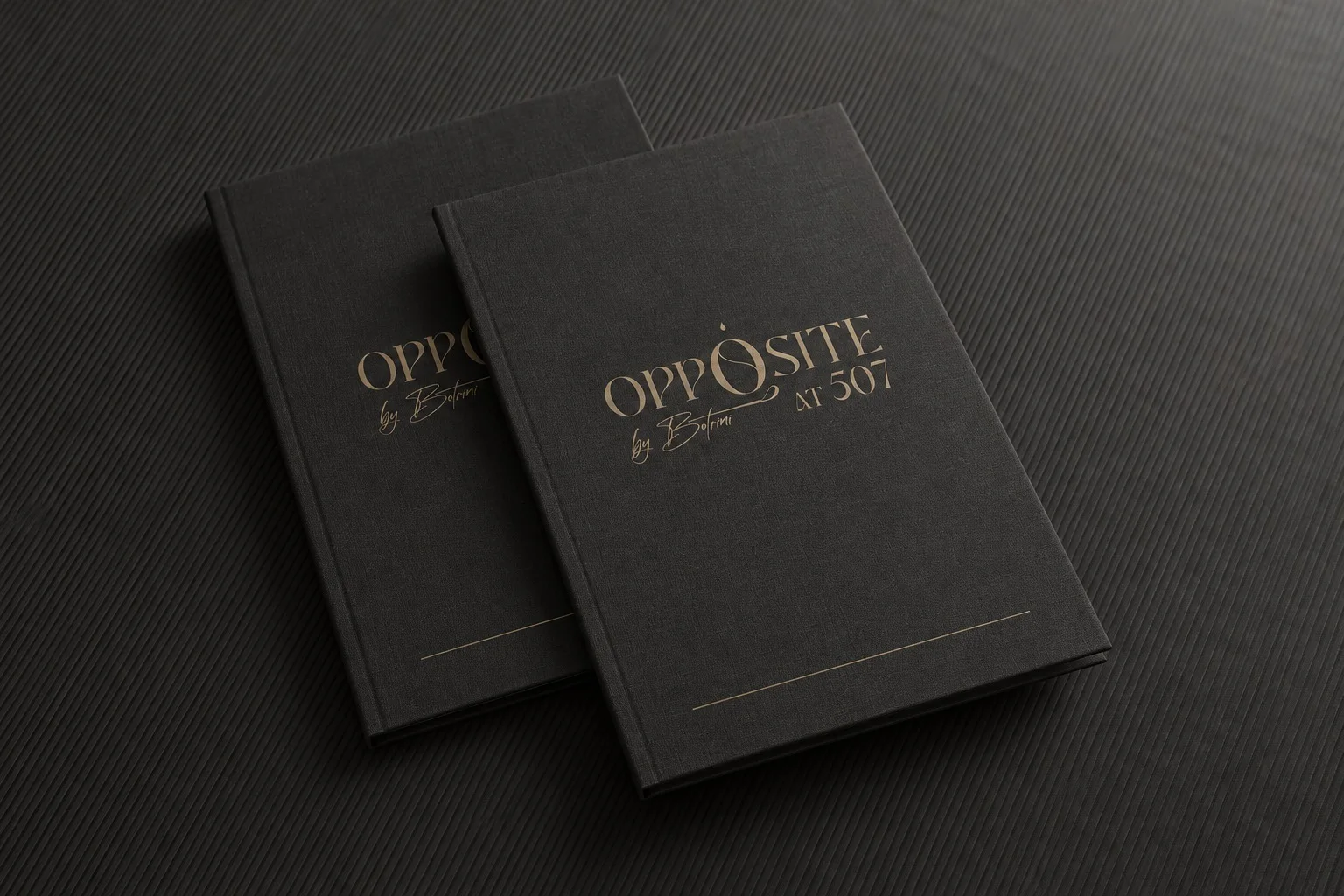
Opposite at 507: the monogram, typography and palette move from the logo to the menu and tabletop details. The project images present identity applications as mockups.
Before giving final approval
Review the menu with the person responsible for content: correct dishes and prices, matching language editions, spelling, contact details, page count and reading order. Test print at actual size and the digital file on a phone. Keep one clearly named, approved final version.
Frequently asked questions about menu design
Can a new menu be designed without changing the logo?
Yes, when the existing identity supports the concept and suitable artwork and guidance are available. First we assess what can be used and what needs completing.
Do I need one menu or several formats?
It depends on service periods, information volume and the way guests order. The number of formats belongs in the brief, before layout starts.
Are printing and future changes included?
Only the work stated in the proposal is included. Agree separately on production, digital development, editable templates and future updates.
From the menu to the wider experience
See how menu design connects with restaurant branding and explore our branding service for restaurants and cafés. At Hello Design, we shape the direction and applications with your team and the appropriate production partners.
Let’s discuss your menu and restaurant identity. For the first conversation, bring a short concept description, the existing menu, languages and formats you need.