


When should a business rebrand? Seven signs and the right process
A business needs rebranding when its current identity no longer reflects its strategy, audience or value. The answer, however, is not always a new logo. The right solution may be a brand refresh, a repositioning or a deeper change to the name, architecture and customer experience.
Effective rebranding begins with diagnosis. If only the appearance changes while the underlying problem remains, the business will look new but create the same confusion.
What is rebranding?
Rebranding is the strategic redefinition of a brand so it can better serve the organisation’s present reality and future direction. It may include a new positioning, name, verbal identity, visual system, redesigned experience and a planned rollout across every touchpoint.
Rebranding goes beyond an aesthetic update. As a business decision, it affects how a company presents itself, competes and delivers its promise.
Rebrand or brand refresh: what is the difference?
| Brand refresh | Rebranding |
|---|---|
| Evolves the existing expression. | Reconsiders the strategic foundation. |
| Retains key recognisable assets. | May change positioning, name and identity. |
| Fits a relevant brand that feels dated or inconsistent. | Fits a brand that no longer matches the business or market. |
| Usually has a narrower scope and lower transition risk. | Requires deeper research, alignment and rollout planning. |
When to rebrand, refresh a logo or organise your visual identity
A clear diagnosis defines the design brief. These three common situations help you choose the right scope before asking for a proposal.
Refresh the logo when the problem is practical
Your audience and positioning still fit, but the mark loses detail at small sizes or works poorly on screen. Review its proportions, simplify where needed and create suitable versions. The goal is a useful logo that retains the elements customers already recognise.
Organise the visual identity when materials lack consistency
A strong existing mark can stay. What may be missing is a shared system for colour, type, imagery and layout, plus templates the team can use. Our corporate and visual identity guide explains the deliverables that support this work.
Consider a wider rebrand when the business has changed
A new audience, offer or market position calls for a strategic review first. Then assess whether the name, messaging, visual identity or several elements need to change. Evidence and business needs should define the scope.
Before you start: what has changed in the business? What do customers already recognise? Where does the current identity fall short? What evidence will help you assess the result? Use the answers to build the brief.
Seven signs it may be time to rebrand
1. The business has changed but the brand has not
New services, a different audience, a larger scale or better quality are not reflected in the current identity. A gap has opened between what the business is and what the market perceives.
2. You cannot explain what makes you different
If your description could belong to any competitor, the problem is strategic. A clearer position is required before visual changes begin.
3. You attract the wrong audience
The brand may feel budget while the experience is premium, or overly corporate while the product is designed for a progressive audience. A brand should act as a filter: attracting the right people and setting accurate expectations.
4. The brand is inconsistent
Different logos, colours, messages and styles across the website, social media, stores and presentations create friction. If guidelines and better implementation cannot solve the inconsistency, the system itself may no longer be fit for purpose.
5. There has been a merger, acquisition or ownership change
The new organisation needs a coherent story and brand architecture. Rebranding can unite services, cultures and audiences without unnecessarily discarding the equity of existing brands.
6. The name creates limitations or confusion
A name may be tied to an old service, difficult internationally, hard to pronounce or impossible to protect. Renaming carries risk, but it can be necessary for the next stage of growth.
7. Trust or relevance has been lost
If the brand is linked with a negative experience or an outdated market perception, a new visual identity alone will not be enough. Real change in product, operations and behaviour must come first, followed by a system that makes it visible.
When should you not rebrand?
Do not rebrand simply because:
- leadership is bored with the current identity,
- a competitor launched something more dramatic,
- a visual trend has become popular,
- sales declined before the cause was diagnosed,
- a new executive wants to leave a personal mark.
Rebranding cannot repair a weak product, poor service or flawed commercial strategy. It can express meaningful change; it cannot substitute for it.
Arian Maritime: from a logo to a consistent visual system
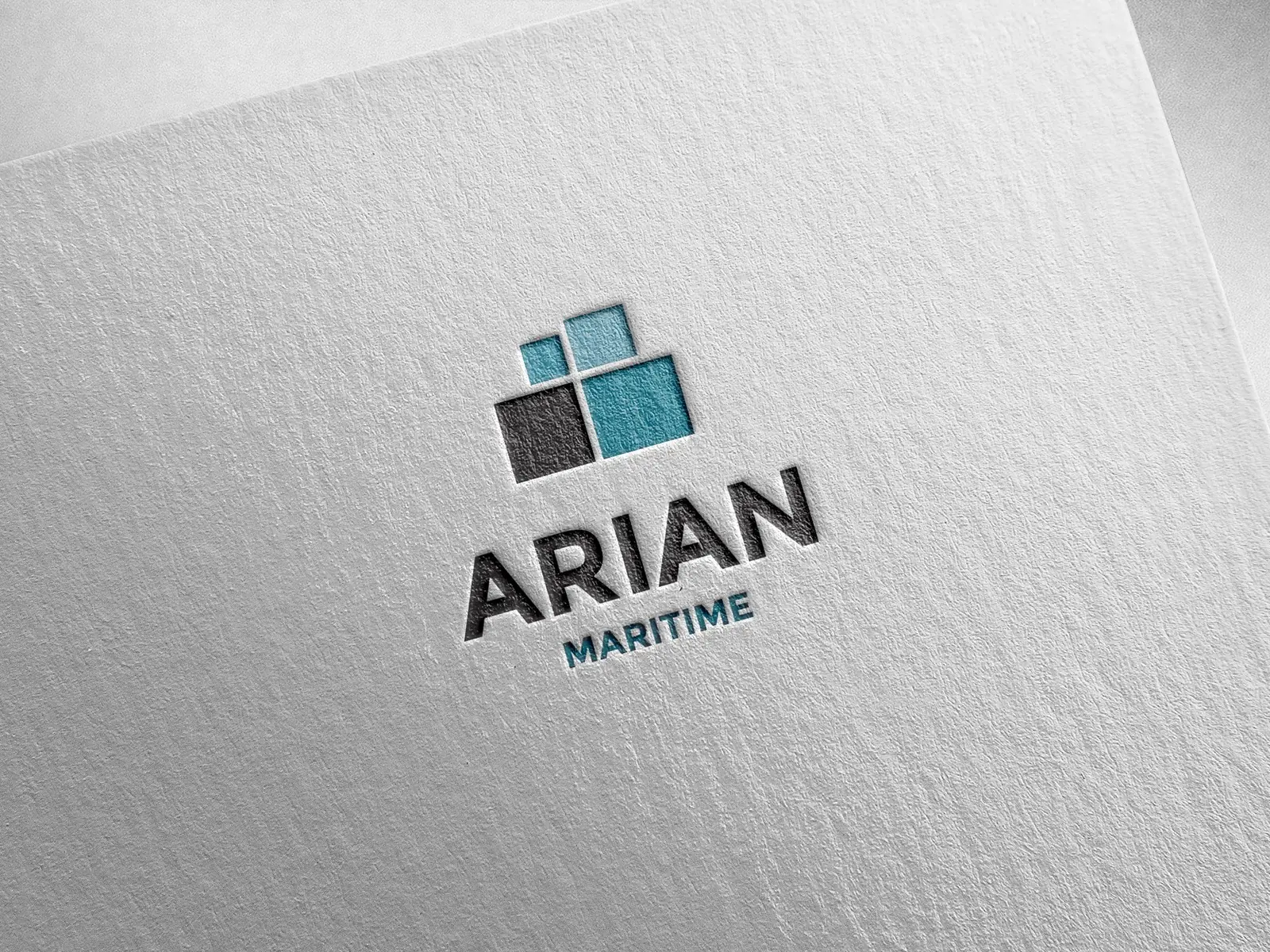
Arian Maritime works in international freight and logistics across sea, air and land. In 2024, the company commissioned us to redesign its existing logo and develop its corporate identity, alongside materials for events and exhibitions.
The project brings a geometric symbol, clear typography and blue tones into one visual language. Applications include letterheads, business cards, printed materials, advertising and banners. These show how the same principles can work across different sizes and formats.
The double-page advertisement for Posidonia shows the identity working with a real communication task. The logo, information and layout need to work together. For this reason, reviewing an identity means testing actual content and sizes, alongside the mark itself.
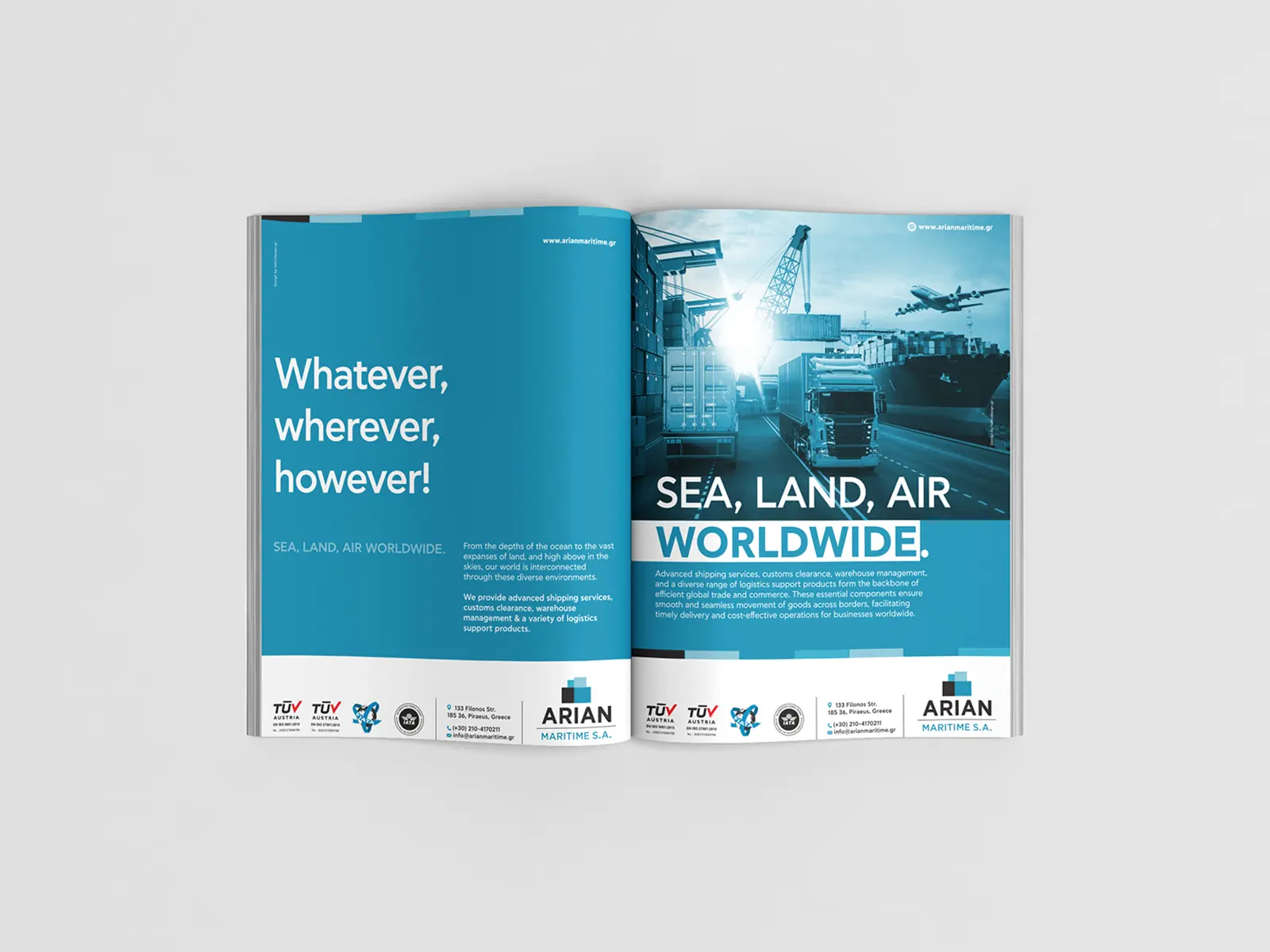
For your own project, the lesson is practical: identify the key applications at the start. Test the identity where customers will encounter it. Explore the full Arian Maritime project to see more applications.
A sound rebranding process
1. Define the business problem
What needs to change, and why now? What business outcome should the project create? The answer must be more precise than “we need to look modern”.
2. Identify existing brand equity
Customer research, data and stakeholder interviews reveal which elements deserve to remain. Good rebranding does not erase the past automatically; it separates useful heritage from unnecessary baggage.
3. Redefine strategy
Audience, competitive frame, positioning, promise, personality and brand architecture should be agreed before the new identity is designed.
4. Build the verbal and visual identity
Name, tagline, messages, tone of voice, logo and design system must express the same central idea. Creative work should be evaluated against agreed criteria, not a vote on personal preference.
5. Test the system in real applications
Websites, mobile screens, presentations, social templates, packaging, menus, signage and physical spaces show whether the identity can genuinely perform.
6. Plan the rollout
Which assets change first? What happens to old stock? How will customers, partners and staff be informed? A phased plan with clear owners prevents two identities from coexisting indefinitely.
7. Measure after launch
Track awareness, understanding, lead quality, conversion, pricing position, direct bookings or the indicators that connect to the original objective.
A practical plan for introducing the new identity
Planning the change
Introduce the identity in agreed phases.
If a rebrand is the right step, agree what changes first and how the different channels will follow.
Agree priorities
Identify the essential applications and who approves each decision.
Prepare the files
Organise approved artwork, copy, guidance and production requirements.
Coordinate the channels
Plan the website, signage, print and other touchpoints around real dependencies.
Introduce the identity
Give the team and relevant partners the material and context they need.
Review consistency
Check the live applications and record what still needs attention.
The order and dates depend on the agreed scope, available material and production needs; this is not a fixed-duration schedule.
Adapt this plan to your business and its priorities. Before setting a launch date, agree on the production needs, dependencies and person responsible for each task.
1. List the touchpoints and set priorities. Include the website, social profiles, email signatures, presentations, print, packaging and signage. Record old stock, replacement costs and deadlines. Start with the materials that matter most to customers.
2. Approve the files and templates. Finalise logo versions, colour specifications, typefaces and usage guidelines. Give the team ready-to-use templates for its everyday work.
3. Prepare the digital touchpoints. Get website, profile and email updates ready before the announcement. Check mobile layouts, forms, links and contact details. If domains or URLs must change, involve the developer in planning the migration and redirects.
4. Coordinate production and installation. Allow time for proofs, printing and signage installation. Decide which materials change at launch and which can follow in stages. Set clear limits for using old stock.
5. Brief the team and launch. Inform employees and partners who work with the brand first. Assign one coordinator to gather approvals and check that the main touchpoints are ready for the agreed date.
6. Review after launch. Look for old files, inconsistent materials and technical errors. Then compare the agreed measures with the starting point over a period that suits the business goal.
The main risks — and how to reduce them
- Loss of recognition: keep assets with proven equity and design a clear transition.
- Internal resistance: involve the right people early without turning design into a referendum.
- Budget overrun: map every touchpoint and production requirement before approving scope.
- Inconsistent rollout: provide guidelines, templates, training and clear brand governance.
- A promise without proof: align design with real operational change.
How much time and budget does rebranding require?
There is no standard duration or fee for a rebrand. Research, naming, applications, production, available content and approval responsibilities determine the schedule and scope. Agree on the dependencies and the work included before setting a launch date. Our guide to branding costs and deliverables explains what to compare in a proposal.
A decision check before starting a rebrand
Bring three real examples of the problem. They might be customer misunderstandings, an application that cannot be used or a service the current identity no longer explains. Include evidence of what still works, rather than treating everything as a problem.
Compare the smallest useful intervention. Could clearer messaging, organised templates or a focused identity refresh resolve the issue? If the audience, offer and positioning need to change together, a broader rebrand may be justified. Record the reason for the chosen scope.
Count the transition work before approving it. Inventory the places where the identity appears, including existing stock and digital accounts, then assign approval and replacement responsibilities. The Arian Maritime applications above illustrate design consistency; they do not establish a measured change in sales or recognition.
Frequently asked questions about rebranding
Does the logo always have to change?
No. If the existing mark has recognition and can support the new strategy, it may be retained or evolved. Change should follow a need, not a convention.
How should a rebrand be announced?
Explain plainly what is changing, what remains and why the change benefits customers. Communication should be supported by consistent implementation, not a new identity that appears in fragments.
Can rebranding damage SEO?
Yes, if domains, URLs or site structure change without a technical migration plan. Redirects, important content, metadata and post-launch monitoring must be managed carefully. Brand and website planning should happen together.
How do you secure leadership buy-in?
Use evidence: define the business problem, show its effect on customers and performance, calculate the cost of inaction and agree how success will be measured.
Turn the diagnosis into a clear project scope
At Hello Design, we start with what has changed, who you want to reach and which applications you need. Our Branding & Rebranding service explains the process, deliverables and stages of working together.
Let’s talk about your project.
If this guide relates to something you’re preparing, tell us a little about your business. We’ll talk through the next steps together.
For an initial discussion, tell us about your business, the current problem, the materials you use and any important deadline. These details help us discuss whether a refresh, a visual identity system or a wider rebrand fits your needs.